English
Within the modern medical diagnostic and therapeutic framework, the bronchoscope serves as an indispensable instrument for the diagnosis and treatment of respiratory disorders. Its precise operational capabilities and extensive application scenarios provide clinicians with an ‘eye’ and ‘hands’ to explore the depths of the airways, significantly advancing the development of respiratory medicine and related disciplines. The following sections offer a comprehensive analysis of bronchoscopes, covering concepts, applications, classifications, and manufacturer selection criteria.
(1) What is Bronchoscopy?
Bronchoscopy is a medical device specifically designed for observing, diagnosing, and treating lesions within the trachea, bronchi, and lungs. Through a slender, flexible shaft inserted via the patient's nose or mouth into the airways, it directly reaches affected areas, enabling clinicians to clearly visualise the internal condition of the airways. As a key representative of flexible endoscopes, its shaft can bend freely to conform to the natural curvature of the airways. This design significantly reduces patient discomfort during examination while ensuring a broader scope of inspection, enabling thorough exploration from the main bronchi down to the terminal bronchioles.
(2) Core Applications of Bronchoscopy
Bronchoscope sale serves dual diagnostic and therapeutic functions, acting as a vital bridge linking clinical symptoms to pathological realities and enabling precision medicine. Diagnostically, it assists physicians in identifying minute airway lesions and obtaining tissue samples for pathological analysis. Therapeutically, it facilitates minimally invasive interventions such as foreign body removal, airway obstruction relief, and localised drug delivery, thereby reducing risks and trauma associated with conventional surgery.
Clinical diagnosis represents bronchoscopy's primary application, with its core value lying in providing direct, reliable evidence for precise disease diagnosis. This manifests in several key aspects:
Firstly, visualisation of the airways forms the foundation and critical element of diagnostic applications. Through the bronchoscope's high-definition imaging system, clinicians can observe in real time the colour, morphology, and integrity of the tracheal and bronchial mucosa, identifying abnormalities such as hyperaemia, oedema, ulceration, haemorrhage, foreign bodies, or neoplasms. For instance, in patients presenting with persistent cough or haemoptysis, visualisation enables direct screening for conditions like bronchiectasis, lung cancer, or bronchial tuberculosis, circumventing the limitations of traditional imaging that may lead to missed or misdiagnosed cases.
Secondly, bronchoscopy facilitates the acquisition of samples essential for pathological diagnosis. It enables the removal of lesion tissue via biopsy forceps for histological examination, thereby determining the nature of the lesion (e.g., benign or malignant); Brushing can collect cells from the airway mucosal surface for cytological analysis; lavage can collect bronchoalveolar lavage fluid for microbiological, immunological, and biochemical examinations, providing crucial evidence for diagnosing infectious diseases (such as pneumonia or pulmonary mycoses) and autoimmune diseases (such as sarcoidosis). Additionally, for solitary pulmonary nodules, transbronchial lung biopsy (TBLB) guided by bronchoscopy or endobronchial ultrasound-guided transbronchial needle aspiration (EBUS-TBNA) can be employed to obtain nodular tissue or mediastinal lymph node samples. This clarifies the nodule's nature and guides subsequent treatment planning.
With the rapid advancement of interventional pulmonology, bronchoscopy has evolved from a purely diagnostic tool into a vital therapeutic modality, playing a central role in the interventional management of airway diseases. Key applications include:
Firstly, the relief of airway obstruction. Bronchoscopic intervention can address airway narrowing or blockages caused by tumours, granulation tissue proliferation, foreign bodies, or mucus plugs. For instance, thermal ablation techniques such as laser, argon plasma coagulation (APC), or high-frequency electrocautery may be employed to remove tumours or granulation tissue. Cryoprobes can be used for cryoablation of lesions. In cases of severe airway narrowing, bronchoscopically guided placement of stents can provide structural support, restoring airway patency and improving respiratory function.
Secondly, removal of airway foreign bodies. For children or adults who have aspirated foreign bodies into the airways (such as peanuts, melon seeds, coins, dentures, etc.), bronchoscopy serves as a safe and effective retrieval tool. Physicians can precisely locate the foreign body via bronchoscopy and then extract it using instruments such as foreign body forceps or retrieval baskets. This prevents airway obstruction leading to asphyxia or severe complications like pulmonary infection and atelectasis.
Thirdly, localised drug delivery and haemostasis. In treating certain pulmonary infections (such as infected bronchiectasis or lung abscesses), antibiotics can be delivered directly to the affected site via bronchoscopy, enhancing local drug concentration and therapeutic efficacy. For minor haemorrhages within the airways, bronchoscopes can spray haemostatic agents (e.g., adrenaline, thrombin) or apply balloon compression to effectively control bleeding. Additionally, bronchoscopes enable localised chemotherapy infusion for lung cancer patients, delivering drugs directly to tumour tissue and reducing systemic chemotherapy side effects.
Based on usage scenarios, design characteristics, and reusability, bronchoscopes are primarily categorised into portable bronchoscopes and single-use fibre-optic bronchoscopes. Each type offers distinct advantages in clinical applications, catering to different diagnostic and therapeutic requirements.
(1) Portable Bronchoscopes
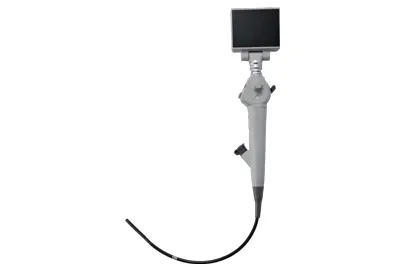
Portable bronchoscopes are widely utilised in clinical settings due to their compact, lightweight, and easily transportable nature. Their increasing prominence in bedside diagnostics represents a significant developmental trend. Traditional bronchoscopes are typically large, specialised equipment requiring dedicated endoscopy suites. In contrast, portable bronchoscopes are compact and lightweight, enabling easy transport to wards, ICUs, emergency departments, and other settings, thereby facilitating bedside care for critically ill patients. For instance, in the ICU, should a mechanically ventilated patient experience increased airway resistance or respiratory distress, clinicians can immediately employ a portable bronchoscope for bedside assessment. This allows for the identification of potential obstructions such as sputum plugs, foreign bodies, or airway narrowing, enabling prompt clearance or intervention. This approach avoids the risks associated with patient transfer. During emergency resuscitation, for immobile patients with severe trauma or shock, the portable bronchoscope enables rapid airway assessment and intubation guidance, enhancing resuscitation success rates. Furthermore, portable bronchoscopes are suitable for settings with limited medical resources, such as primary care hospitals and field hospitals, effectively expanding bronchoscopy applications to provide diagnostic and therapeutic services to more patients.
(2) Single-Use Fibre-Optic Bronchoscopes
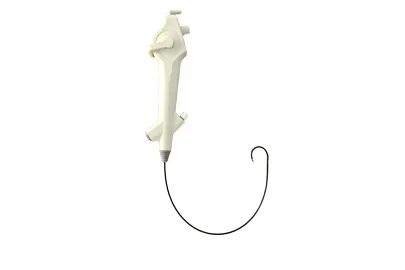
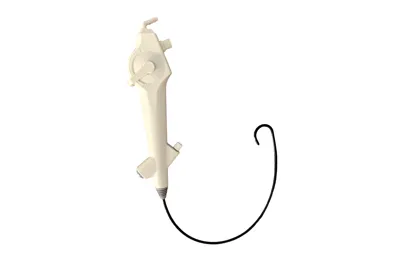
Disposable fibre-optic bronchoscopes represent a significant innovation in bronchoscopy portable in recent years, offering distinct advantages over traditional reusable bronchoscopes:
Firstly, they completely eliminate the risk of cross-infection. Reusable bronchoscopes require rigorous cleaning, disinfection, and sterilisation after each use. Inadequate processing may lead to the transmission of pathogens (such as bacteria, viruses, fungi) between patients, causing cross-infection. Disposable fibre-optic bronchoscopes, being single-use devices for individual patients, are directly disposed of as medical waste after use. This fundamentally eliminates the risk of cross-infection, offering crucial safety assurance particularly during infectious disease outbreaks (such as the COVID-19 pandemic) or for immunocompromised patients (including those with cancer or HIV).
Secondly, they offer enhanced convenience, reducing the workload for healthcare personnel. The cleaning, disinfection, and sterilisation processes for reusable bronchoscopes are complex and time-consuming, requiring specialised staff and dedicated disinfection equipment, thereby increasing both the workload for medical staff and the operational costs for hospitals. Disposable fibre-optic bronchoscopes are ready for immediate use upon unpacking, eliminating the need for intricate pre-treatment and subsequent disinfection/sterilisation procedures. This significantly streamlines operational workflows, saving time and labour costs while improving diagnostic and therapeutic efficiency.
Thirdly, they offer stable performance and clear imaging. With continuous advancements in manufacturing technology, the optical and operational capabilities of disposable fibre-optic bronchoscopes have matched or even surpassed those of traditional reusable models. Utilising high-quality fibre-optic imaging systems, they deliver high-definition, stable images, ensuring clinicians obtain clear visualisation of airway conditions. Concurrently, the scopes exhibit excellent flexibility and manoeuvrability, adapting effectively to diverse airway anatomical structures to meet clinical diagnostic and therapeutic requirements.
As precision medical devices, bronchoscopes' quality and performance directly impact diagnostic and therapeutic safety and efficacy, making the selection of a dependable manufacturer paramount. When globally evaluating bronchoscope manufacturers, prioritise the following criteria:
Firstly, stringent quality standards and certifications. Premium bronchoscope manufacturers must adhere to rigorous international and domestic quality standards, such as ISO 13485 Medical Device Quality Management System Certification, CE Marking (EU), and NMPA Certification (China). These accreditations serve as vital assurances of product quality and safety, indicating compliance with relevant regulations and standards throughout design, production, and inspection processes, thereby delivering secure and reliable clinical solutions.
Secondly, robust research and development capabilities alongside technological innovation. Bronchoscopy technology undergoes continuous advancement and renewal, encompassing innovations such as high-definition imaging, minimally invasive therapeutic techniques, and artificial intelligence-assisted diagnostics. Reputable manufacturers must possess strong R&D teams and sustained technological innovation capacity to keep pace with industry trends. This enables them to continually introduce new products with enhanced performance and comprehensive functionality, meeting the ever-evolving demands of clinical diagnosis and treatment. For instance, they should develop bronchoscopes featuring higher-resolution imaging systems, more flexible manoeuvrability, and enhanced minimally invasive therapeutic capabilities. Alternatively, they may integrate artificial intelligence to enable automatic lesion identification and diagnosis, thereby improving diagnostic precision and efficiency.
Thirdly, a comprehensive after-sales service system. As precision equipment, bronchoscopes may encounter malfunctions or require maintenance during use, making the manufacturer's after-sales support system crucial. A dependable manufacturer should establish an extensive after-sales service network, providing timely and professional support including equipment installation and commissioning, operator training, maintenance, and spare parts supply. Additionally, they must possess rapid response capabilities, enabling prompt dispatch of technicians for repairs when equipment fails, thereby minimising downtime and ensuring uninterrupted clinical operations.
Finally, a strong market reputation and positive clinical feedback are vital. A manufacturer's market standing and clinical application feedback directly reflect the quality of their products and service standards. During the selection process, one can assess a manufacturer's market recognition and the clinical efficacy of their products by reviewing industry reports, consulting clinicians, and investigating usage experiences at other hospitals. Choosing a manufacturer with a favourable market reputation and excellent clinical feedback reduces procurement risks and ensures the acquisition of high-quality products and services.
Among numerous bronchoscope manufacturers, Haiye Medical stands as a trusted partner for high-quality bronchoscopes, distinguished by its exceptional product quality, robust R&D capabilities, comprehensive after-sales service, and strong market reputation. Haiye Medical consistently prioritises quality, strictly adhering to the ISO 13485 Medical Device Quality Management System and NMPA certification standards. Rigorous controls are implemented at every stage—from raw material procurement and production processing to finished product inspection—ensuring product safety and reliability. In R&D, Haiye Medical employs a team of senior engineers and medical specialists dedicated to innovation and breakthroughs in bronchoscopy technology. Its portable bronchoscopes and single-use fibre-optic bronchoscopes offer advantages such as high-definition imaging, flexible manoeuvrability, and safe, convenient operation, meeting diverse clinical diagnostic and therapeutic requirements. Furthermore, Haiye Medical has established a nationwide after-sales service network offering 24-hour rapid response. This provides clients with professional installation, commissioning, operational training, and maintenance support to ensure stable equipment operation. Thanks to its superior products and services, Haiye Medical's bronchoscopes are now widely used across respiratory departments, ICUs, and emergency departments in hospitals of all levels. They have garnered consistent acclaim from clinicians and patients alike, establishing the company as a significant driving force in advancing respiratory disease diagnosis and treatment in China.