English
In today's era of rapid iteration of medical technology, endoscopes, as the "core weapon" of minimally invasive diagnosis and treatment, are witnessing a continuous rise in market demand. Whether it is the equipment upgrade of primary medical institutions or the demand for precise diagnosis and treatment in tertiary hospitals, both are driving the continuous expansion of the endoscope market. However, what follows is the core confusion faced by hospitals during procurement: how should they choose between single-use endoscopes and reusable endoscopes?
Today, we will comprehensively outline the core logic of endoscope procurement for you, covering market trends, key selection criteria, product comparisons, and the selection of high-quality manufacturers, helping you avoid selection pitfalls and precisely match your diagnosis and treatment needs.
In recent years, the global endoscope market has shown a steady growth trend, especially in fields such as gastroenterology, respiratory medicine, and urology, where the application scenarios of endoscopes have been continuously expanding. According to relevant data statistics, the global medical endoscope market size exceeded $50 billion in 2024 and is expected to reach over $80 billion by 2030.
Behind this growth lie three core drivers: First, the popularization of the minimally invasive diagnosis and treatment concept. Compared with traditional open surgery, endoscopic surgery has advantages such as less trauma, faster recovery, and fewer complications, making it highly favored by both doctors and patients. Second, the changing disease spectrum brought about by an aging society, with the high incidence of gastrointestinal diseases, lung diseases, etc., has given rise to a large number of endoscopic diagnosis and treatment needs. Third, the innovative upgrading of medical technology, with the integration of technologies such as high-definition imaging and artificial intelligence-assisted diagnosis, has enhanced the diagnostic and therapeutic value of endoscopes.
For endoscope manufacturers, this presents both opportunities and challenges. How to stand out in the fierce market competition and meet the diverse needs of medical institutions has become the focus of common concern in the industry.
When selecting endoscopes, medical institutions often do not solely focus on a single indicator but instead consider multiple factors comprehensively. The core driving factors mainly include the following points:
First is the matching degree of diagnostic and treatment needs. Different departments and different diagnostic and treatment items have different requirements for endoscopes. For example, gastroscopes in gastroenterology need to have high-definition imaging and flexible maneuverability, while laryngoscopes in otolaryngology require a small probe and clear field of view. Therefore, the first step in model selection is to clarify one's own diagnostic and treatment needs.
Next is safety. The safety of medical devices is the bottom line. Endoscopes come into direct contact with the internal tissues of patients, and if there is a risk of infection, the consequences would be unimaginable. Whether they are disposable or reusable endoscopes, their safety needs to be verified through strict testing and certification.
Another factor is cost-effectiveness. Comprehensive costs such as procurement costs, usage costs, and maintenance costs directly affect the operational efficiency of hospitals. Especially against the backdrop of medical insurance cost control, how to achieve "maximum cost-effectiveness" has become an important consideration for hospitals during procurement.
Finally, there is the reliability of the manufacturer. A high-quality manufacturer can not only provide high-quality products but also comprehensive after-sales services, such as equipment maintenance, technical training, consumables supply, etc., which are crucial for ensuring the stable operation of the equipment.
In the current era when single-use endoscopes are gradually on the rise, many people may wonder: Do reusable endoscopes still remain competitive? The answer is yes. For reliable manufacturers, reusable endoscopes, with their unique advantages, still occupy an important position in the market and play a lasting role.
The core advantage of reusable endoscopes lies in long-term cost-effectiveness. Although the initial procurement cost is relatively high, after undergoing strict cleaning, disinfection, and sterilization processes, they can be reused multiple times, resulting in a lower cost per diagnosis and treatment session, making them particularly suitable for tertiary hospitals or specialized hospitals with a large volume of diagnoses and treatments.
In addition, reusable endoscopes produced by trusted manufacturers offer better guarantees in terms of product quality and performance stability. By using high-quality materials and precision manufacturing processes, reusable endoscopes can achieve high-definition imaging and precise control, meeting the needs of complex diagnosis and treatment scenarios. Meanwhile, manufacturers also provide comprehensive maintenance services to extend the service life of the equipment.
To more intuitively demonstrate the advantages of reusable endoscopes, we analyzed them in combination with two typical cases:
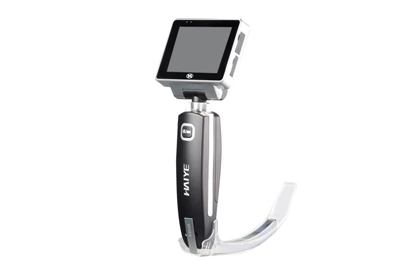
Case 1: The Anesthesiology Department of a Class III Grade A hospital introduced reusable video laryngoscopes from a trusted manufacturer. The daily surgical volume of the Anesthesiology Department of this hospital exceeds 80 cases, with a very high frequency of laryngoscope use. After introducing the reusable video laryngoscopes, through strict implementation of the cleaning and disinfection procedures, the equipment has been operating stably for over 2 years without any infection incidents. After calculation, compared with using disposable video laryngoscopes, it can save approximately 300,000 yuan in costs annually. Meanwhile, the high-definition imaging function of this laryngoscope effectively improves the success rate of tracheal intubation and reduces anesthesia risks.
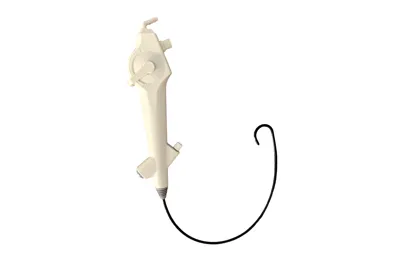
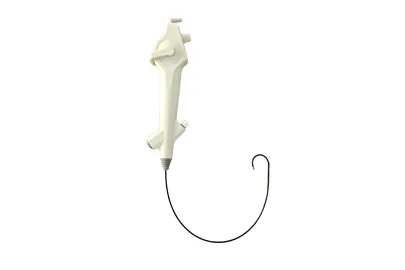
Case 2: The Department of Respiratory Medicine at a specialized hospital uses a reusable flexible laryngoscope from a certain manufacturer. This department mainly conducts bronchoscopy examinations and treatments, with high requirements for the flexibility and imaging quality of the laryngoscope. Thanks to its slender probe and precise maneuverability, the reusable flexible laryngoscope can reach deep into the bronchial endings and clearly observe the lesion sites. The regular maintenance service provided by the manufacturer ensures the stable performance of the device, and to date, it has been used over 5,000 times in total while still maintaining good operating condition.
Disposable endoscopes and reusable endoscopes each have their own advantages and disadvantages, with significant differences in terms of cost, safety, and environmental impact. Below, we will conduct a detailed comparison from these three core dimensions to help medical institutions make better selection decisions.
Infection control is of utmost importance in the process of endoscope use and is also the core focus of the controversy between the two.
The advantage of single-use endoscopes lies in zero risk of cross-infection. They are directly discarded after use, eliminating the need for cleaning and disinfection processes, fundamentally avoiding cross-infection caused by incomplete cleaning and substandard disinfection. This advantage makes them irreplaceable in primary healthcare institutions, emergency diagnosis and treatment scenarios, or the diagnosis and treatment of infectious disease patients.
However, this does not mean that the infection risk of reusable endoscopes cannot be controlled. As long as the relevant national standards and the cleaning and disinfection procedures provided by the manufacturer are strictly followed, and qualified cleaning and disinfection equipment and consumables are used, the infection risk of reusable endoscopes can be fully controlled at an extremely low level. In fact, most Class III Grade A hospitals have been using reusable endoscopes for a long time without experiencing large-scale infection incidents.
Therefore, in terms of infection control, the two are not in an "either-or" relationship, but rather a balanced choice should be made based on one's own diagnosis and treatment scenarios and management level.
Total Cost of Ownership (TCO), which includes procurement cost, usage cost, maintenance cost, disposal cost, etc., is the core indicator for measuring the cost-effectiveness of endoscopes.
In terms of procurement cost, the unit procurement cost of single-use endoscopes is relatively low, usually ranging from a few hundred yuan to a few thousand yuan; while the initial procurement cost of reusable endoscopes is relatively high, with the unit price reaching up to tens of thousands of yuan.
However, in terms of long-term usage cost, reusable endoscopes have more advantages. Taking gastroscopes in gastroenterology as an example, a reusable gastroscope can have a service life of 5 to 8 years, be reused thousands of times, and the cost per diagnosis and treatment is only a few dozen yuan; while the cost of a single-use gastroscope per use is several hundred yuan. If a hospital has a daily diagnosis and treatment volume of 50 cases, the annual cost of using gastroscopes alone will amount to hundreds of thousands of yuan.
In addition, reusable endoscopes also need to consider maintenance costs, including cleaning and disinfection consumables, regular maintenance fees, etc.; while single-use endoscopes do not require maintenance and are directly discarded after use, with no maintenance costs. Overall, medical institutions with a large volume of diagnosis and treatment find it more cost-effective to choose reusable endoscopes, while primary medical institutions with a small volume of diagnosis and treatment are more suitable to choose single-use endoscopes.
Among numerous endoscope manufacturers, Haiye Medical has emerged as a leader in the industry, thanks to its outstanding product quality, profound technological accumulation, and comprehensive service system. Since its establishment, Haiye Medical has always been dedicated to the research, development, production, and sales of endoscopes, committed to providing high-quality endoscope products and innovative diagnosis and treatment solutions to global medical institutions.
Haiye Medical has a R&D team composed of senior engineers and medical experts, which always keeps up with industry technological trends, continuously invests in R&D resources, and overcomes technical challenges. The company has established a strict quality control system, with every link from raw material procurement to product production, testing, and delivery adhering to international standards to ensure product safety and performance stability. Currently, Haiye Medical's products have passed multiple international certifications such as CE and FDA, and are exported to over 50 countries and regions worldwide, being highly trusted by medical institutions and healthcare professionals.
As a professional flexible endoscope manufacturer, Haiye Medical has the following three core advantages:
First, core technologies are independently controllable. Haiye Medical has independently developed core technologies such as high-definition imaging technology, precision transmission technology, and corrosion-resistant material technology, breaking the technological monopoly of foreign brands. The flexible endoscopes produced by the company offer clear imaging, true colors, and can accurately present the details of the lesion site; they are flexible and smooth to operate, enabling medical staff to easily perform complex diagnosis and treatment procedures.
Second, it has strong product customization capabilities. Haiye Medical can provide customized flexible endoscope products according to the diagnosis and treatment needs of different medical institutions. Whether it is the diameter and length of the probe, or the resolution and viewing angle of imaging, they can all be adjusted according to customer needs to meet diverse diagnosis and treatment scenarios.
Thirdly, it has a comprehensive after-sales service system. Haiye Medical has established a global after-sales service network to provide customers with all-round after-sales service support. This includes equipment installation and commissioning, technical training, maintenance, consumables supply, etc., to ensure the stable operation of the equipment. Meanwhile, the company has also set up a 24-hour customer service hotline to promptly answer customers' inquiries and resolve their issues.
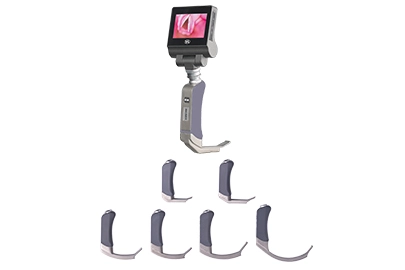
In terms of technological innovation, Haiye Medical has always been at the forefront of the industry, launching a series of innovative endoscopic solutions. Among them, the video laryngoscope with reusable blades is a typical example.
Traditional video laryngoscope blades are mostly single-use, with relatively high costs; while reusable blades have problems such as difficulty in cleaning and disinfection and a relatively high risk of infection. The video laryngoscope with reusable blades developed by Haiye Medical uses special corrosion-resistant materials and a precise sealing structure, which not only ensures the reusability of the blades but also solves the problem of difficulty in cleaning and disinfection.
After undergoing a strict cleaning and disinfection process, the blades of this product can be reused hundreds of times, significantly reducing the cost of use. Meanwhile, its high-definition imaging function and flexible maneuverability effectively improve the success rate of tracheal intubation and reduce the risk of anesthesia. Currently, this product has been put into use in multiple hospitals and has received unanimous praise from medical staff.
For medical institutions, choosing an endoscope is not just about selecting a product; it is also about choosing a long-term partner. A trustworthy video endoscope manufacturer can provide comprehensive support to medical institutions, helping them improve their diagnosis and treatment capabilities and reduce operating costs.
So, how do you choose the right partner? First, look at the manufacturer's qualifications and reputation. Select a manufacturer with relevant production qualifications, international certifications, and a good market reputation to ensure the quality and safety of the products. Second, look at the manufacturer's technical strength and innovation capabilities. Choose a manufacturer that can continuously introduce innovative products and keep up with industry technological trends to ensure the competitiveness of the products. Finally, look at the manufacturer's after-sales service system. Select a manufacturer with a well-established after-sales service network and the ability to provide timely and efficient after-sales service to ensure the stable operation of the equipment.
As a trusted video endoscope manufacturer, Haiye Medical has always been customer demand-oriented, with technological innovation as its core, quality assurance as its foundation, and comprehensive service as its support, committed to providing the highest-quality endoscope products and services to global medical institutions. If you are looking for a suitable endoscope partner, Haiye Medical is definitely your top choice.
Conclusion: Disposable endoscopes and reusable endoscopes each have their own advantages and disadvantages. When selecting endoscopes, medical institutions should make decisions based on their own diagnosis and treatment needs, management capabilities, and operating costs after comprehensive consideration. Choosing a trustworthy manufacturer is the key to ensuring the quality and service of endoscope products. Haiye Medical will always work hand in hand with medical institutions to contribute to the development of minimally invasive diagnosis and treatment technologies.